I work between AI and systems: efficient on-device inference, HPC for scientific models, and rigorous evaluation of language models. From prototype to something measured, tested and published.
Selected projects
Research and engineering, from a Raspberry Pi to a cluster. Open a row for the detail.
A low-cost edge platform on a Raspberry Pi 4 with stereo RGB and an on-demand FLIR Lepton thermal sensor, running ONNX inference on the CPU and turning maritime observations into governed, reproducible data.
Part of EASY (Environmental Awareness by the Sea and beYond) at the University of Naples Parthenope, supervised by Prof. Raffaele Montella. The question: can a cheap embedded node give citizen-contributed maritime observations a reproducible, governable path from sensor to data?
What I did
- Architected a service-oriented runtime in which live and replayed sources share one code path, with a React dashboard and REST API on top.
- Profiled the pipeline stage by stage and found that persistence and request coordination, not the model, dominated latency.
- Found sequence-level leakage in my own first YOLOv8n split (mAP50 0.94), documented it and rebuilt the split leak-free: 0.627 deployed, 0.678 at 960 px.
- Kept every observation traceable: source, session, capture time, device state, model configuration and per-stage timings.
All figures are laboratory results on the prototype; thermal fusion and field deployment are the next step.
Best Poster Award, IEEE eScience 2026 (participants' selection).
Built with Codex and Claude Code. Architecture, validation, testing and review are mine.
- Python
- YOLOv8
- ONNX Runtime
- Raspberry Pi
- FLIR Lepton
- React
- REST
- CI
0 hconcurrent RGB and thermal acquisition
0.00 smean end-to-end inference request
0.0 °Cpeak under full CPU stress, no throttling
0.000mAP50 on a leak-free split
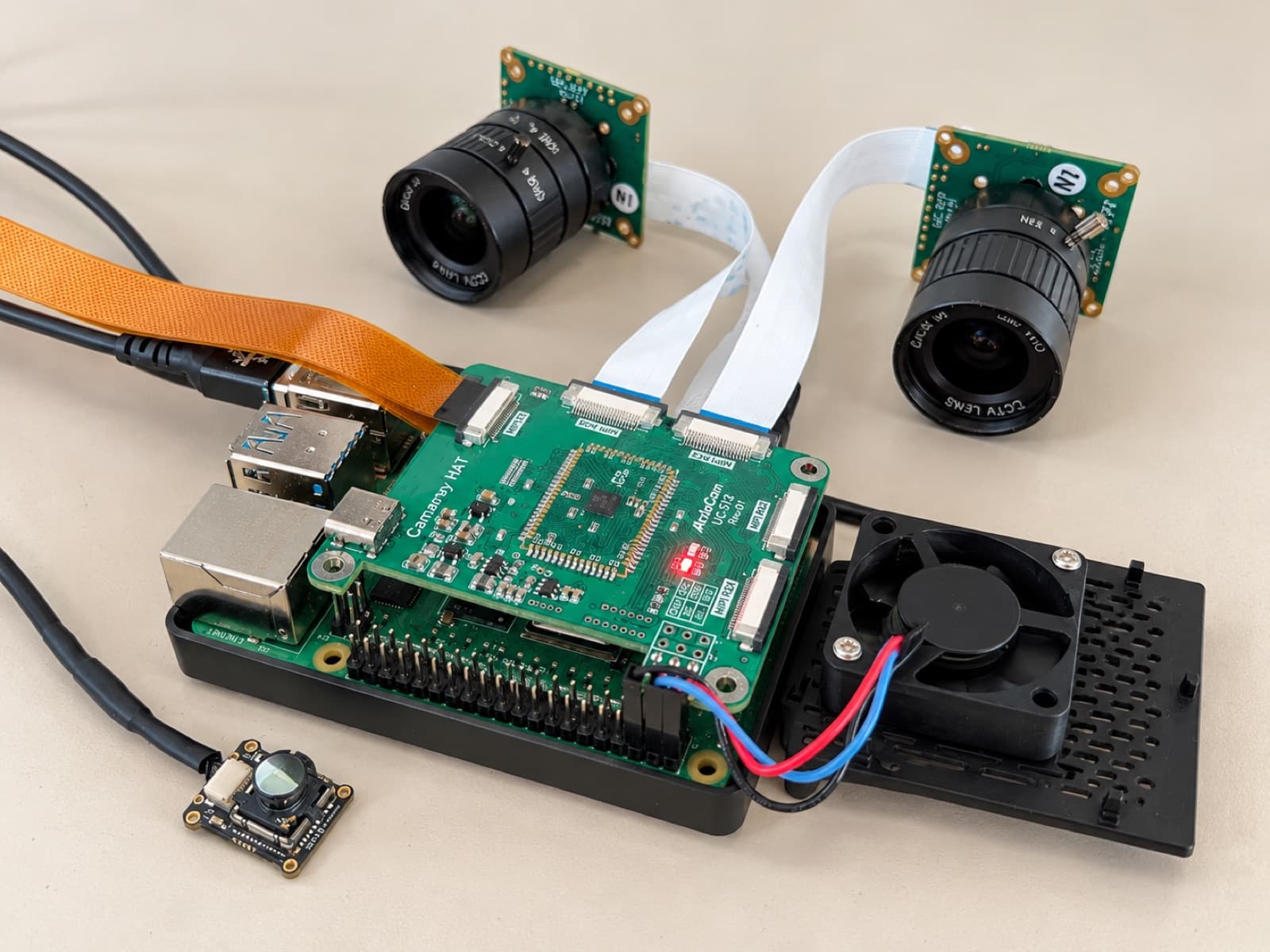
The laboratory prototype used for every measurement: Raspberry Pi 4, two RGB cameras, FLIR Lepton thermal sensor. 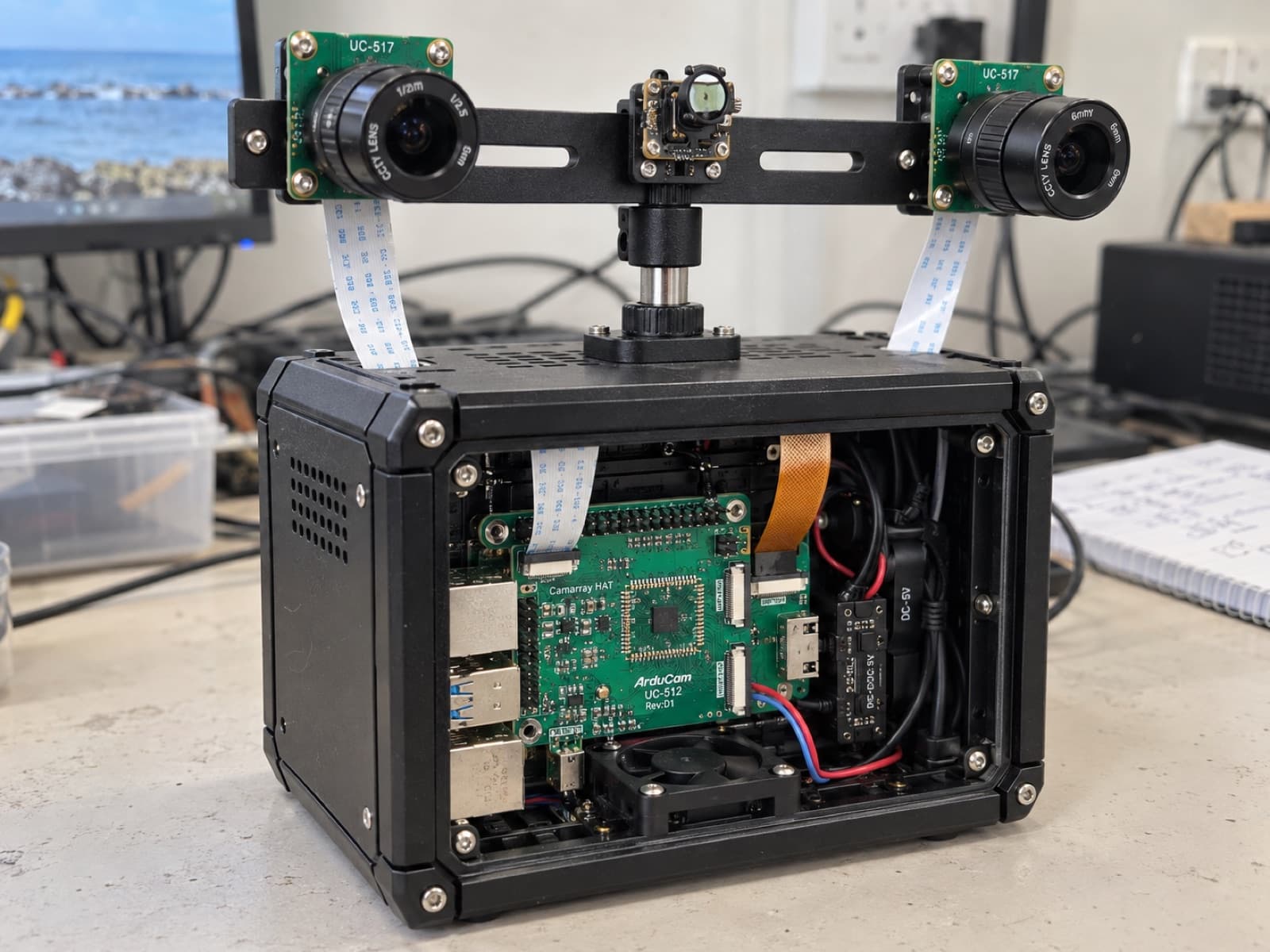
Target integrated node, a design study with a rigid sensor mount. It was not used for the reported measurements.
Papers and posters
Peer-reviewed work and conference posters. Every PDF is here to download.
- 2026
An Edge Node for Citizen-Contributed Maritime Observations
INSTIL Workshop, IEEE eScience 2026, Naples
Coppola, Bucciero, Perrotta, Montella.
- 2026
An Instrumented Edge Node for Dual-Sensor Maritime Safety Monitoring
IEEE eScience 2026, Naples. Poster #312
Best Poster Award, participants' selection.
- 2025
Certamen Artificialis Intelligentia: Evaluating AI in Solving AI-Generated Programming Exercises
33rd International Conference on Information Systems Development (ISD 2025), Belgrade
- 2025
Preserving and Improving the Legacy of eScience: the GLOBO Experience
21st IEEE International Conference on eScience, Chicago
- 2025
Directed Acyclic Graph on Cross-Application Programmable I/O
CINI HPC Summer School, Naples
Co-author. Perrotta et al.
Poster - 2024
app@uniparthenope: architecture and deployment of the official Android and iOS app
Institutional publication
Coppola et al.
Institutional
Best Poster Award · October 2026
IEEE eScience 2026, participants' selection. An Instrumented Edge Node for Dual-Sensor Maritime Safety Monitoring.
- 2026IEEE eScience 2026Naples, 28 Sep — 2 OctINSTIL workshop paper and Poster #312. Best Poster Award, awarded 1 October.
- 2025ISD 2025Belgrade, 3 — 5 SepPaper on LLMs solving AI-generated programming exercises.
- 2025IEEE eScience 2025ChicagoPoster on the modernisation of the GLOBO model.
- 2025CINI Summer School on HPCNaples, 16 — 20 JunCo-author of a poster on cross-application programmable I/O.
How I work

ML/AI engineer and researcher, finishing an MSc in Machine Learning and Big Data at the University of Naples Parthenope (expected March 2027). My work sits between AI and systems, and I like to take an idea all the way to something measured, tested and published.
Right now I am a research fellow on the EASY project, where I built an edge node that records RGB and thermal imagery on a Raspberry Pi and keeps every observation traceable. Before that I modernised parts of the GLOBO atmospheric model for HPC systems and built a pipeline in which language models generate and solve programming exercises.
I care about measurements more than adjectives. If a result looks too good, I check the split before I celebrate.
- May — Nov 2026
Research Fellow, EASY project
University of Naples Parthenope
Post-lauream fellowship on multimodal tools for marine-environment awareness, supervised by Prof. Raffaele Montella. Built and validated the edge prototype end to end and took it to IEEE eScience 2026.
- 2024 — 2026
Teaching Assistant, Computer Architecture
University of Naples Parthenope
Instruction-set architectures, pipelines, cache hierarchies and assembly-level programming.
- 2024 — 2025
Research Fellow, FGPE project
University of Naples Parthenope
Designed and implemented a component that generates gamified programming exercises with LLMs, with evaluation pipelines and dataset benchmarks. It led to the ISD 2025 paper.
- 2024 — 2025
Instructor, seminar on AI and ML with Python
University of Naples Parthenope
A full machine learning workflow with scikit-learn and PyTorch on real datasets.
- 2023 — 2024
Front-End Web Developer
AC Software, Lamezia Terme
Responsive web applications with Angular, HTML, CSS and JavaScript in an agile team.
- 2024 — 2027
MSc, Machine Learning and Big Data
University of Naples Parthenope. Expected March 2027.
- 2020 — 2024
BSc, Computer Science
University of Naples Parthenope. Graduated 25 June 2024, 97/110.
- 2015 — 2020
Technical Diploma, Electrotechnics
I.T.I.S. Eugenio Barsanti.
- English B2, certified
- AWS Academy Cloud Foundations (2024–25) and AWS Educator Accreditation
- Kaggle Learn: Python, Intro and Intermediate ML, ML Explainability
- iOS Development Basic Course, Parthenope (2022)
Strong
Python, PyTorch, LLM pipelines and evaluation, ONNX edge inference, performance instrumentation, agentic engineering with Codex and Claude Code, scientific writing in LaTeX
Working knowledge
MPI and OpenACC, C and C++, scikit-learn, XGBoost, reinforcement learning (DDQN), PySpark, Raspberry Pi and V4L2 cameras, React, Next.js and TypeScript, Angular, Flutter, Docker, GitHub Actions, SLURM and HPC clusters, AWS (EC2, S3, IAM, VPC), MongoDB, MySQL
Basic
Fortran (HPC legacy refactoring), Swift, Kotlin, Java, Node.js, OpenCV, n8n
Levels are self-assessed. Anything not listed is not claimed.